플라밍고는 왜 핑크색일까?
Why are Flamingos Pink?
Flamingos are long-legged wading birds that are usually covered in bright pink feathers. With a name that derives from the Spanish or Portuguese word meaning “flame-colored,” the birds are known for their vibrant appearance. The pink of their feathers, though it is their most famous quality, is not a hereditary trait. Flamingos are in fact born a dull gray.
플라밍고는 다리가 긴 물을 건너는새로 보통 밝은 분홍색 깃털로 덮여 있습니다. 스페인어나 포르투갈어로 "불빛이 도는 색"을 의미하는 단어에서 유래된 이름으로, 그 새들은 활기찬 모습으로 알려져 있습니다. 깃털의 분홍색은 가장 유명한 특성이지만 유전되는 특성은 아닙니다. 플라밍고는 사실 칙칙한 회색으로 태어났습니다.
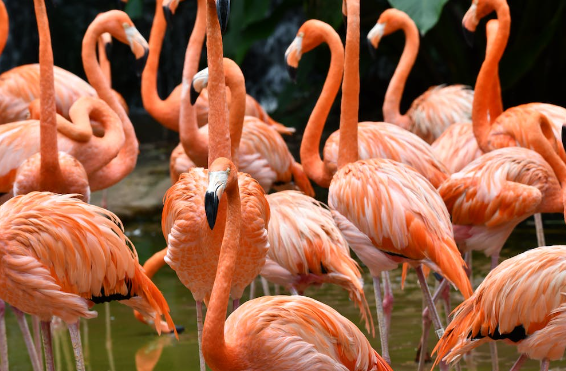
Flamingos get their pink color from their food.
Flamingos really are what they eat. Many plants produce natural red, yellow or orange pigments, called carotenoids. Carotenoids give carrots their orange color or turn ripe tomatoes red. They are also found in the microscopic algae that brine shrimp eat. As a flamingo dines on algae and brine shrimp, its body metabolizes the pigments — turning its feathers pink.
플라밍고는 먹이로부터 분홍색을 얻습니다.
플라밍고는 실제로 그들이 먹는 것입니다. 많은 식물은 카로티노이드라고 불리는 천연 빨간색, 노란색 또는 주황색 색소를 생성합니다. 카로티노이드는 당근을 주황색으로 만들거나 잘 익은 토마토를 붉게 만듭니다. 그들은 염수 새우가 먹는 미세한 해조류에서도 발견됩니다. 플라밍고가 조류와 염수 새우를 먹으면 몸이 색소를 대사하여 깃털이 분홍색으로 변합니다.
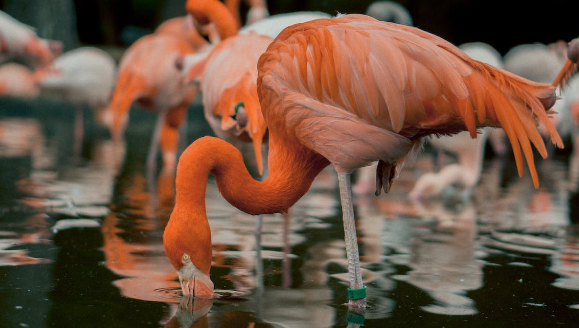
For flamingos, the phrase “You are what you eat” holds more truth than it might for humans. The bright pink color of flamingos comes from beta-carotene, a red-orange pigment that’s found in high amounts within the algae, brine fly larvae, and brine shrimp that flamingos eat in their wetland environment. In the digestive system, enzymes break down carotenoids into pigments that are absorbed by fats in the liver and deposited, for flamingos, in the feathers and skin. To actually color those external attributes, carotenoids must be ingested in very large amounts. Because the flamingo diet is nearly exclusively carotenoid-filled delicacies, the birds have no problem coloring themselves. Humans, on the other hand, would need to eat quite a lot of carrots (a food so rich in carotenoids that it gave the pigments their name) to turn their skin a shade of orange.
플라밍고의 경우 "당신이 먹는 것이 당신이다"라는 문구는 인간에게 있을 수 있는 것보다 더 많은 진실을 담고 있습니다. 플라밍고의 밝은 분홍색은 플라밍고가 습지 환경에서 먹는 조류, 염수 파리 유충 및 염수 새우에서 다량으로 발견되는 적황색 색소인 베타카로틴에서 나옵니다. 소화시스템에서 효소는 카로티노이드를 색소로 분해합니다. 간에서 지방에 흡수되고 플라밍고의 경우 깃털과 피부에 침착되는 색소로 변합니다. 이러한 외부 속성을 실제로 착색하려면 카로티노이드를 매우 많이 섭취해야 합니다. 플라밍고 식단은 거의 전적으로 카로티노이드로 가득 찬 진미이기 때문에 새들은 스스로 색칠하는 데 아무런 문제가 없습니다. 반면에 인간은 피부를 주황색으로 바꾸려면 꽤 많은 양의 당근을 먹을 필요가 있을 것입니다.
There are six different species of flamingos, which are found in various places around the world. Because habitat and food sources vary from place to place and season to season, the birds’ colors also vary. Some flamingos are darker or brighter shades of pink, others are more orange or red, and still others are pure white.
전 세계 다양한 곳에서 발견되는 6종의 플라밍고가 있습니다. 서식지와 먹이구하는 장소와 계절에 따라 다르기 때문에 새의 색상도 다양합니다. 일부 플라밍고는 더 어둡거나 더 밝은 분홍색이고 다른 플라밍고는 더 주황색 또는 빨간색이며 또 다른 플라밍고는 순수한 흰색입니다.
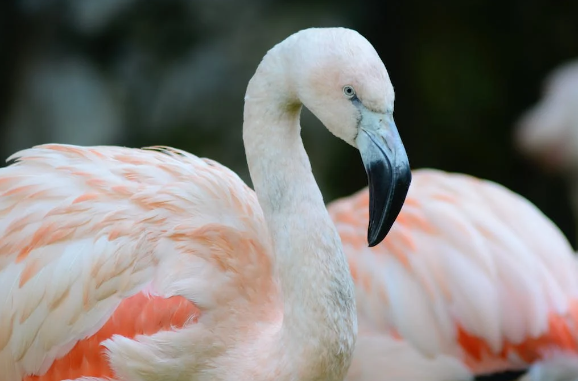
Flamingo legs actually bend just like human legs. What looks like a flamingo's knee is really its ankle joint. A flamingo’s knees are located higher up the legs, hidden by the body and feathers. Think of a flamingo as standing on tiptoe. When the leg bends, it’s the ankle you see hinging.
플라밍고의 다리는 실제로 사람의 다리처럼 구부러집니다. 플라밍고의 무릎처럼 보이는 것은 실제로는 발목 관절입니다. 플라밍고의 무릎은 다리 위쪽에 위치하며 몸과 깃털에 가려져 있습니다. 플라밍고가 발끝으로 서 있다고 생각하십시오. 다리가 구부러지면 보이는 것은 발목입니다.
 홈 > 영어컨텐츠 > Today's Issue