Understanding Hail: A Simple and Complete Guide
Have you ever been surprised by sudden falling ice balls from the sky?
(하늘에서 갑자기 떨어지는 얼음 덩어리에 놀라본 적이 있나요?)
Many people wonder why hail forms, how it differs from snow, and what causes such dramatic weather events.
(많은 사람들이 왜 우박이 생기는지, 눈과는 어떻게 다른지, 그리고 이러한 극적인 날씨 현상이 왜 발생하는지 궁금해합니다.)
In this article, we will explore everything about hail in a simple and interesting way, answering all your questions clearly.
(이 글에서는 우박에 대해 쉽고 흥미롭게 살펴보며, 모든 질문에 명확히 답해드리겠습니다.)
Let’s dive in!
(자, 시작해봅시다!)
What Is Hail?
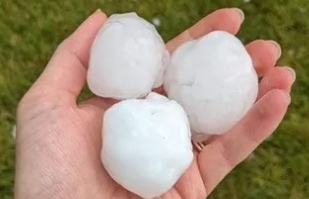
Hail is a type of solid precipitation consisting of balls or lumps of ice.
(우박은 얼음으로 된 공 모양이나 덩어리 모양의 고체 강수 형태입니다.)
Unlike snow, hail forms in strong thunderstorms with intense updrafts and cold temperatures.
(눈과 달리, 우박은 강한 상승 기류와 낮은 온도를 가진 강력한 뇌우 속에서 형성됩니다.)
Hailstones can vary in size, from small pellets to large stones bigger than a golf ball.
(우박은 작은 알갱이부터 골프공보다 큰 크기까지 다양합니다.)
A simple definition of hail:
"Hail is frozen precipitation formed inside thunderstorm clouds when water droplets are carried upward into extremely cold areas of the atmosphere."
(우박은 대기의 매우 차가운 지역으로 물방울이 위로 올라가면서 뇌우 구름 안에서 형성된 얼어붙은 강수입니다.)
Why Does Hail Fall? (우박이 내리는 이유)
Hail forms when several specific atmospheric conditions happen at the same time.
(우박은 여러 가지 특정한 대기 조건이 동시에 발생할 때 형성됩니다.)
Here’s how it works:
Strong Updrafts
(강한 상승 기류)
Thunderstorms produce powerful upward winds called updrafts.
(뇌우는 상승 기류라고 불리는 강한 위로 향하는 바람을 만들어냅니다.)
These winds lift water droplets high into the storm cloud.
(이 바람들은 물방울을 폭풍 구름 속 높은 곳으로 들어 올립니다.)
Freezing Temperatures
(어는 온도)
The higher the droplet goes, the colder it gets.
(물방울이 더 높이 올라갈수록 온도는 더 낮아집니다.)
Eventually, the water droplets freeze into tiny ice particles.
(결국 물방울은 작은 얼음 입자로 얼게 됩니다.)
Repeated Up and Down Movements
(반복적인 위아래 이동)
The ice particles are caught in the updrafts and downdrafts.
(얼음 입자들은 상승 기류와 하강 기류에 의해 휘말립니다.)
Each cycle adds more layers of ice around the hailstone.
(각 순환마다 우박 주변에 더 많은 얼음 층이 쌓입니다.)
Too Heavy to Stay Aloft
(공중에 머물 수 없을 정도로 무거워짐)
When the hailstone becomes too heavy for the updraft to support, it falls to the ground.
(우박이 상승 기류가 지탱할 수 없을 만큼 무거워지면 땅으로 떨어집니다.)
Thus, hail is not just random ice from the sky—it’s a complex product of violent storm dynamics!
(따라서 우박은 하늘에서 무작위로 떨어지는 얼음이 아니라, 격렬한 폭풍의 역학 작용의 복잡한 산물입니다.)
How Hail Forms: The Detailed Process (우박 생성과정)
Let’s look at the hail formation step-by-step:
(우박 생성 과정을 단계별로 살펴봅시다.)
1.Cumulonimbus clouds grow tall due to warm, moist air.
(따뜻하고 습한 공기에 의해 적란운이 높이 성장합니다.)
2.Water vapor condenses into water droplets.
(수증기가 물방울로 응결합니다.)
3.Updrafts carry the droplets into extremely cold regions of the cloud.
(상승 기류가 물방울을 구름의 매우 차가운 지역으로 운반합니다.)
4.Droplets freeze and form tiny ice nuclei.
(물방울이 얼어 작은 얼음 핵을 형성합니다.)
5.The ice nuclei collect supercooled water droplets.
(얼음 핵이 과냉각된 물방울을 모읍니다.)
6.Layers of ice build up as the hailstone cycles through the cloud.
(우박이 구름 속을 순환하면서 얼음 층이 쌓입니다.)
7.When the stone becomes too heavy, it falls as hail.
(우박이 너무 무거워지면 땅으로 떨어집니다.)
Each hailstone can tell a story of the storm's strength by the number of layers it has!
(각 우박은 그 층의 수를 통해 폭풍의 강도를 이야기해줍니다.)
Difference Between Hail and Snow (우박과 눈의 차이)
It’s common to confuse hail with snow, but they are very different.
1.Formation Process
(형성 과정)
Snow forms from ice crystals that stick together inside cold clouds.
(눈은 차가운 구름 안에서 얼음 결정이 서로 붙어서 형성됩니다.)
Hail forms from water droplets that freeze and accumulate layers inside thunderstorms.
(우박은 뇌우 속에서 얼어붙고 여러 층이 쌓인 물방울로 형성됩니다.)
2.Appearance
(외형)
Snowflakes are delicate and light.
(눈송이는 섬세하고 가볍습니다.)
Hailstones are hard, heavy, and often round.
(우박은 단단하고 무겁고 종종 둥급니다.)
3.Weather Conditions
(날씨 조건)
Snow usually occurs in calm, cold conditions.
(눈은 보통 차갑고 평온한 조건에서 발생합니다.)
Hail needs strong thunderstorms and severe updrafts.
(우박은 강한 뇌우와 심한 상승 기류가 필요합니다.)
Understanding these differences helps you predict what to expect during different types of storms.
(이러한 차이를 이해하면 다양한 유형의 폭풍우 동안 어떤 현상이 발생할지 예측하는 데 도움이 됩니다.)
Fascinating Facts About Hail (우박에 대해)
The largest hailstone recorded in the United States weighed about 2 pounds (around 0.9 kilograms)!
(미국에서 기록된 가장 큰 우박은 약 0.9킬로그램, 즉 약 2파운드였습니다.)
Hailstorms can cause serious damage to crops, cars, and even buildings.
(우박 폭풍은 농작물, 자동차, 심지어 건물에도 심각한 피해를 줄 수 있습니다.)
Hailstones are often layered like an onion, showing how many times they cycled inside the cloud.
(우박은 종종 양파처럼 층을 이루는데, 이는 구름 안에서 몇 번 순환했는지를 보여줍니다.)
Some hailstones fall at speeds up to 100 mph (about 160 km/h).
(일부 우박은 시속 약 160킬로미터 속도로 떨어집니다.)
Hail is an amazing and powerful weather phenomenon formed by the perfect combination of moisture, temperature, and storm dynamics.
(우박은 수분, 온도, 폭풍 역학의 완벽한 조합으로 형성된 놀랍고 강력한 날씨 현상입니다.)
By understanding how hail forms and how it differs from snow, you can appreciate the complexity of our atmosphere even more.
(우박이 어떻게 형성되고 눈과 어떻게 다른지 이해함으로써, 우리의 대기의 복잡성을 더욱 잘 이해할 수 있습니다.)
Next time you see ice balls falling from the sky, you’ll know exactly what’s happening!
(다음에 하늘에서 얼음 덩어리가 떨어지는 것을 보면, 무슨 일이 벌어지고 있는지 정확히 알 수 있을 것입니다.)
핵심 어휘 정리
hail 우박
precipitation 강수, 강수량
lump 덩어리
thunderstorm 뇌우, 천둥번개를 동반한 폭풍
updraft 상승 기류
downdraft 하강 기류
atmosphere 대기, 공기
vapor 수증기
condense 응결하다, 농축되다
freeze 얼다, 얼리다
nucleus (복수형 nuclei) 핵, 중심
supercooled 과냉각된
accumulate 축적하다, 쌓이다
layer 층, 층을 이루다
cycle 순환, 반복
severe 심각한, 혹독한
phenomenon 현상
predict 예측하다
delicate 섬세한, 부드러운
trigger 촉발시키다, 일으키다
cause 원인이 되다
spark 불꽃, 촉발시키다
prompt 유발하다, 자극하다
crop 농작물
damage 피해, 손상
appreciation 이해, 인식, 감상
 홈 > 영어컨텐츠 > Today's Issue